
Golf Practice at Home: The Complete Guide to Improving Your Game Without Leaving Your Backyard

Golf is one of those games that rewards consistency. The more often you practice, the more confident and controlled your game becomes. But what if you don’t have time to make it to the range every day? Or you simply want to work on your game without spending money on buckets of balls? The answer is simple: practice at home.
In this comprehensive guide, we’ll explore how to create an effective home practice routine, from putting drills in your living room to full swings in the backyard, and even mental training exercises you can do from your couch. Let’s get started.
Why Practicing at Home Works
Practicing golf at home has multiple benefits:
Convenience: You can squeeze in practice sessions before work, during lunch breaks, or late at night.
Consistency: Small, regular practice sessions are often more beneficial than long, occasional range sessions.
Cost-Effective: No need to buy range tokens or book simulator time.
Focus: At home, you can work on one specific part of your game without distractions.
Setting Up Your Home Golf Practice Space
Before you start swinging clubs, find a safe and comfortable practice area.
Indoor Practice
Living Room or Garage: Use a hitting mat to protect floors.
Putting Mat: A simple roll-out putting mat is one of the best investments you can make.
Mirror: Use a full-length mirror for checking posture and swing positions.
Outdoor Practice
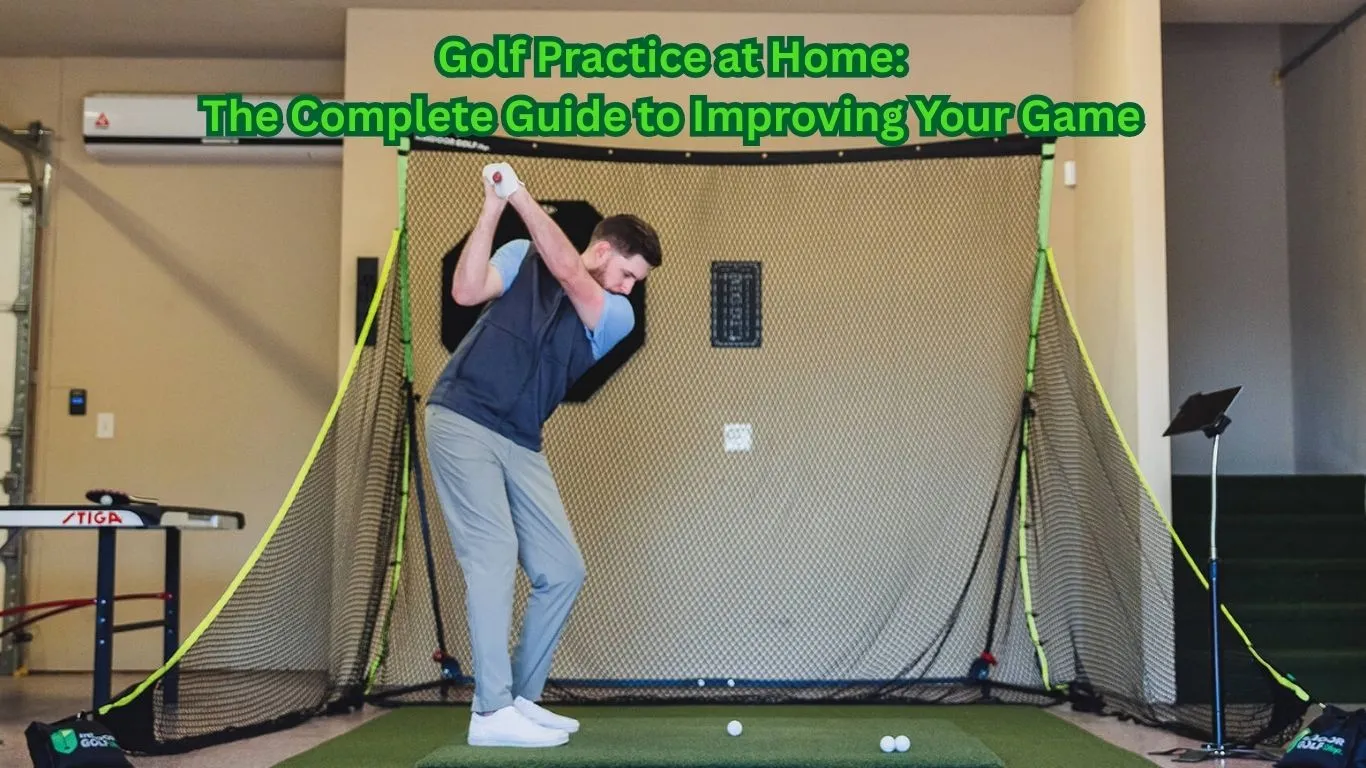
Backyard Net: A hitting net lets you practice full swings without worrying about breaking windows.
Chipping Targets: Use hula hoops, buckets, or commercial chipping nets.
Lighting: If possible, add outdoor lights for evening practice.
Optional Upgrades
- Launch monitors like Rapsodo, Mevo, or Garmin for instant feedback.
- Portable simulators for realistic, year-round practice.
Warm-Up and Mobility Drills
A good warm-up keeps you loose and prevents injury.
Dynamic Stretches: Arm circles, torso twists, and hip openers.
Balance Work: Stand on one leg for 30 seconds per side to activate core stability.
Slow Swings: Take half-speed swings to groove your motion.
Putting Practice at Home
Putting is the easiest part of your game to practice indoors.
Essential Drills
- Gate Drill: Place two tees just wider than your putter head and practice rolling through the gate.
- Distance Control: Use coins or sticky notes as targets at different distances.
- Straight Line Drill: Use a chalk line or string to ensure your putts start on the right line.
Consistency with putting practice will pay huge dividends on the course.
Chipping and Pitching Drills
Short game practice can be done with limited space.
- Use foam or plastic practice balls indoors.
- Landing Spot Drill: Pick a spot on the carpet and practice landing the ball there.
- One-Club Challenge: Practice bump-and-run, flop, and chip shots with the same wedge.
If you have a backyard, set up a small chipping net and vary your distances.
Full Swing Practice

Even without a driving range, you can improve your full swing.
Tools
Hitting Net: Allows you to make real swings safely.
Impact Bag: Great for practicing solid contact.
Mirror or Phone Camera: Record your swing for analysis.
Drills
Slow Motion Swings: Perfect for ingraining good mechanics.
Pause at the Top Drill: Improves transition and tempo.
Feet-Together Drill: Promotes balance and center contact.
Mental Game Training
Golf is as much mental as it is physical.
Visualization: Imagine hitting perfect shots on your favorite hole.
Breathing Exercises: Helps calm nerves before important shots.
Pre-Shot Routine: Practice your routine at home until it becomes automatic.
Strength and Fitness for Golf
Improving your body will improve your swing.
Exercises to Try
Planks: Build a strong core.
Lunges and Squats: Add power to your lower body.
Resistance Band Rotations: Mimic the golf swing and build rotational strength.
Even 10–15 minutes per day can make a noticeable difference.
Using Technology to Practice Smarter
Affordable tech can make home practice more productive.
- Swing apps for slow-motion review.
- Launch monitors for club speed, ball speed, and carry distance.
- Virtual simulators for playing full courses indoors.
Building Your Practice Schedule
Consistency matters more than duration.
- Daily: 10–15 minutes of putting.
- 3x Per Week: 20 minutes of chipping and pitching.
- Weekly: Full swing session with net or simulator.
- Track progress in a notebook or app.
Practicing in Small Spaces
Apartment or limited space? No problem.
Swing Trainers: Short training clubs allow safe practice.
Foam Balls: Safe for indoor use.
Mirror Work: Perfect for rehearsing setup and takeaway.
Common Mistakes to Avoid
- Only practicing full swings while ignoring putting.
- Practicing without feedback — use video or alignment tools.
- Over-swinging indoors, risking injury or damage.
Final Tips for Success
- Make practice fun — add games and challenges.
- Practice with a purpose. Have a goal for every session.
- Stay patient. Improvement takes time, but home practice speeds it up.
You don’t need a driving range or country club membership to get better at golf. With the right setup, a few tools, and a consistent plan, you can dramatically improve your game right from home. Start small, focus on one part of your game at a time, and build from there. The next time you hit the course, you’ll notice the difference.