
Best Golf Ball for Distance: How to Maximize Your Yardage


Ever stood on the tee, crushed a drive straight down the fairway… only to see your buddy outdrive you by 30 yards? You’re not alone, and the reason might not just be your swing. The golf ball you use plays a huge role in how far your shots go. Some balls are engineered specifically for distance, using smart materials and aerodynamic designs to launch longer and fly farther.
But here’s the catch: not every “distance ball” is right for every golfer. Your swing speed, skill level, and even your equipment all matter. In this guide, we’ll break down what makes a golf ball ideal for distance, how to choose the right one for your game, and the best options for 2025.
Why Distance Matters in Golf
Distance isn’t just about bragging rights — it can change your entire game. Longer drives mean shorter approach shots, giving you more chances to hit greens in regulation and set up birdie putts. For high handicappers, gaining even 10–15 extra yards off the tee can mean using a 7-iron instead of a hybrid on your second shot.
That makes scoring easier, especially on long par 4s and 5s. And for competitive players, maximizing distance is often the key to staying ahead of the field.
But here’s the thing: chasing distance without understanding the factors behind it can backfire. Let’s start by clearing up a few common myths.
Common Misconceptions About Distance Balls
When golfers hear “distance ball,” they often assume it’s only for beginners or players with slow swings. But that’s not always the case. Let’s bust a few myths right now:
Misconception #1: All distance balls feel hard and cheap
Many players avoid distance balls because they assume the feel will be too firm. While older models sacrificed feel for extra yards, modern distance balls use advanced materials that offer a better balance of feel and performance, especially off the tee.
Misconception #2: Distance balls are only for high handicappers
Sure, many distance balls are designed to help slower swing speeds. But that doesn’t mean lower-handicap players can’t benefit. Some distance-focused models are built specifically for fast swingers who want more carry without losing control.
Misconception #3: Spin doesn’t matter if you just want distance
Spin absolutely matters. A ball with the right spin rate helps reduce drag and keep your shots straighter. Too much spin can balloon your drives, while too little can cause shots to fall out of the air early.
What Makes a Golf Ball Good for Distance?
Not all golf balls are built the same — and the ones designed for distance focus on three key things: core compression, cover material, and dimple pattern. Let’s break each one down.
Related Products
Bridgestone 2024 Tour B RX MindSet Golf Balls
Original price was: $74.99.$69.98Current price is: $69.98.Bridgestone 2024 Tour B RXS MindSet Golf Balls
Original price was: $74.99.$69.98Current price is: $69.98.Bridgestone 2024 Tour B X MindSet Golf Balls
Original price was: $74.99.$69.98Current price is: $69.98.Bridgestone 2024 Tour B XS Golf Ball
Original price was: $74.99.$69.98Current price is: $69.98.
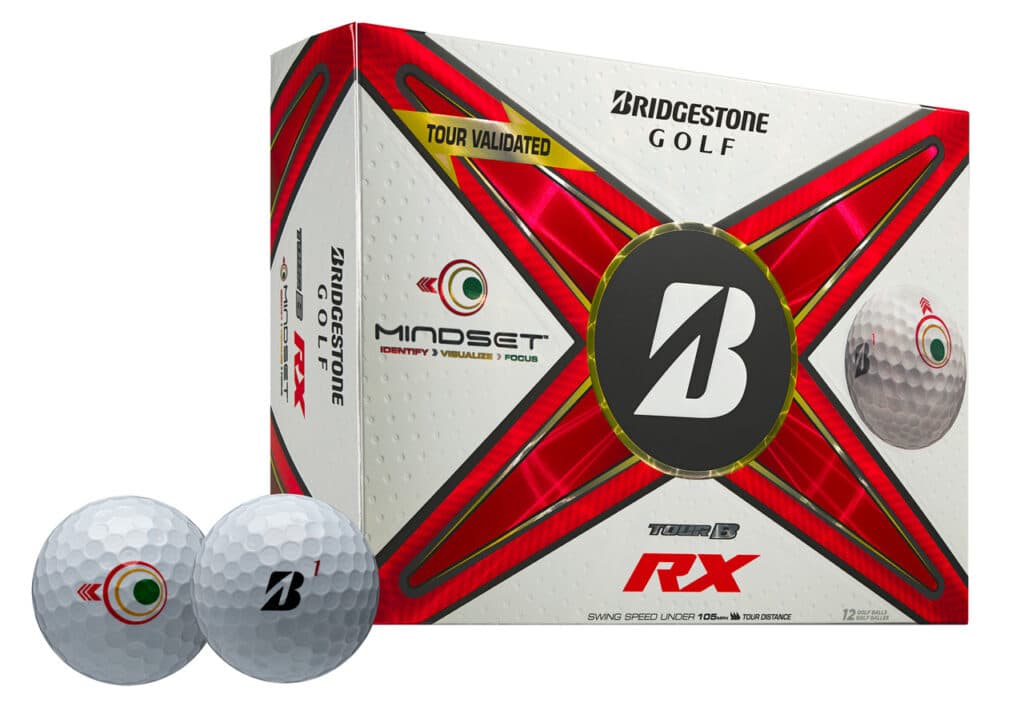
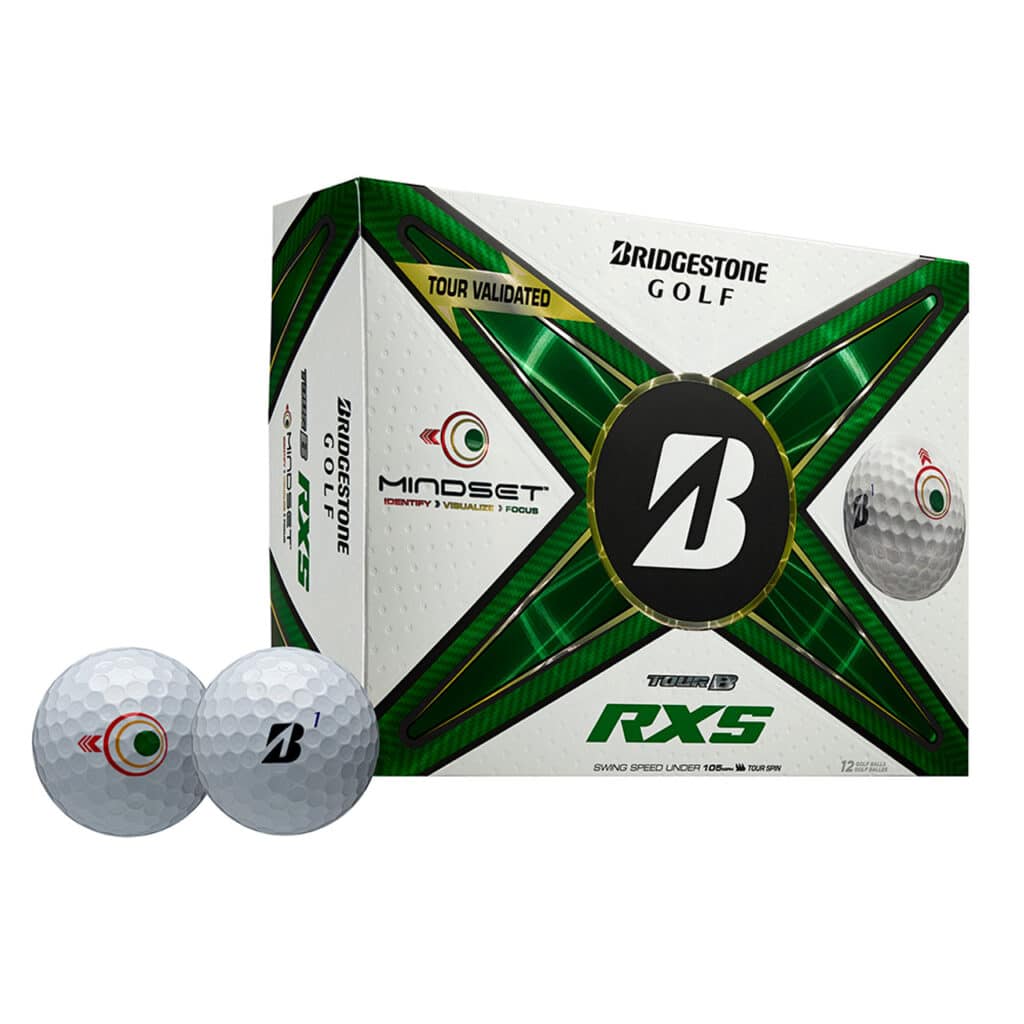
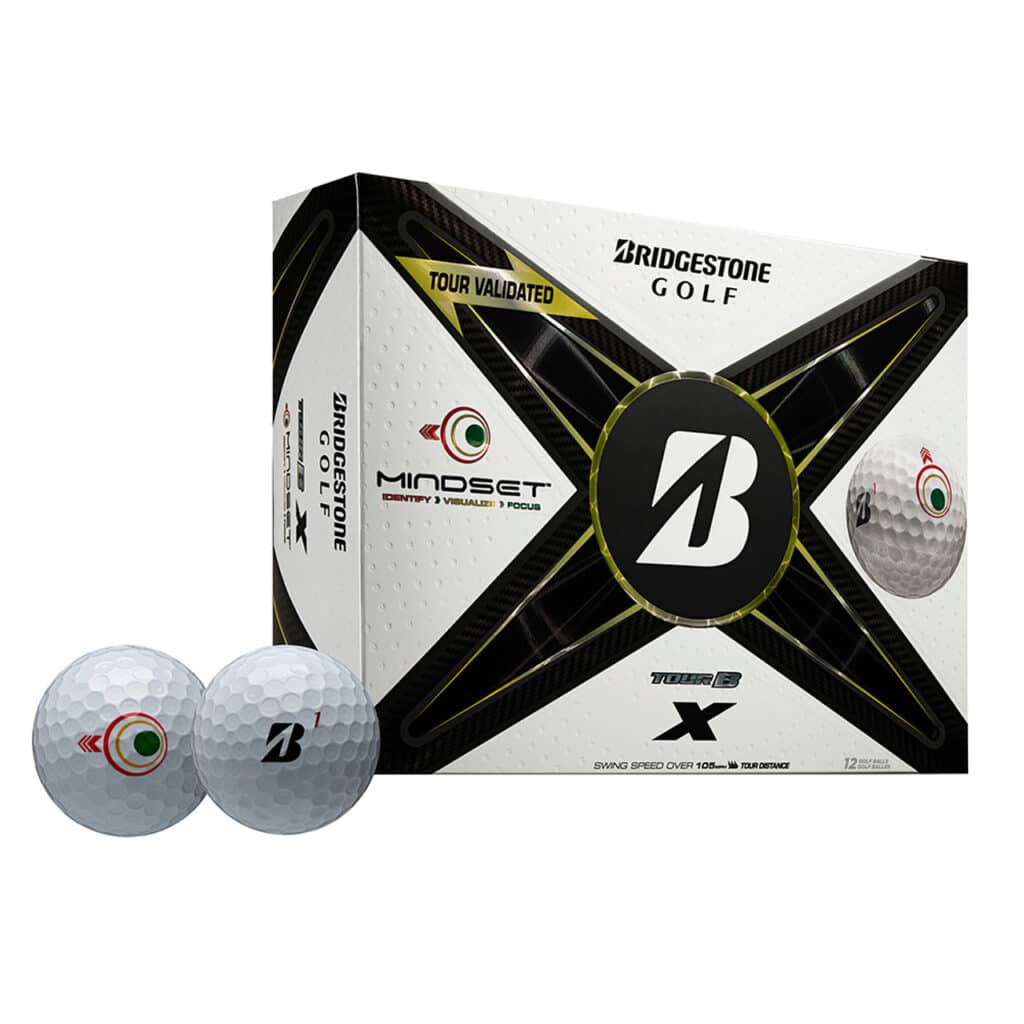
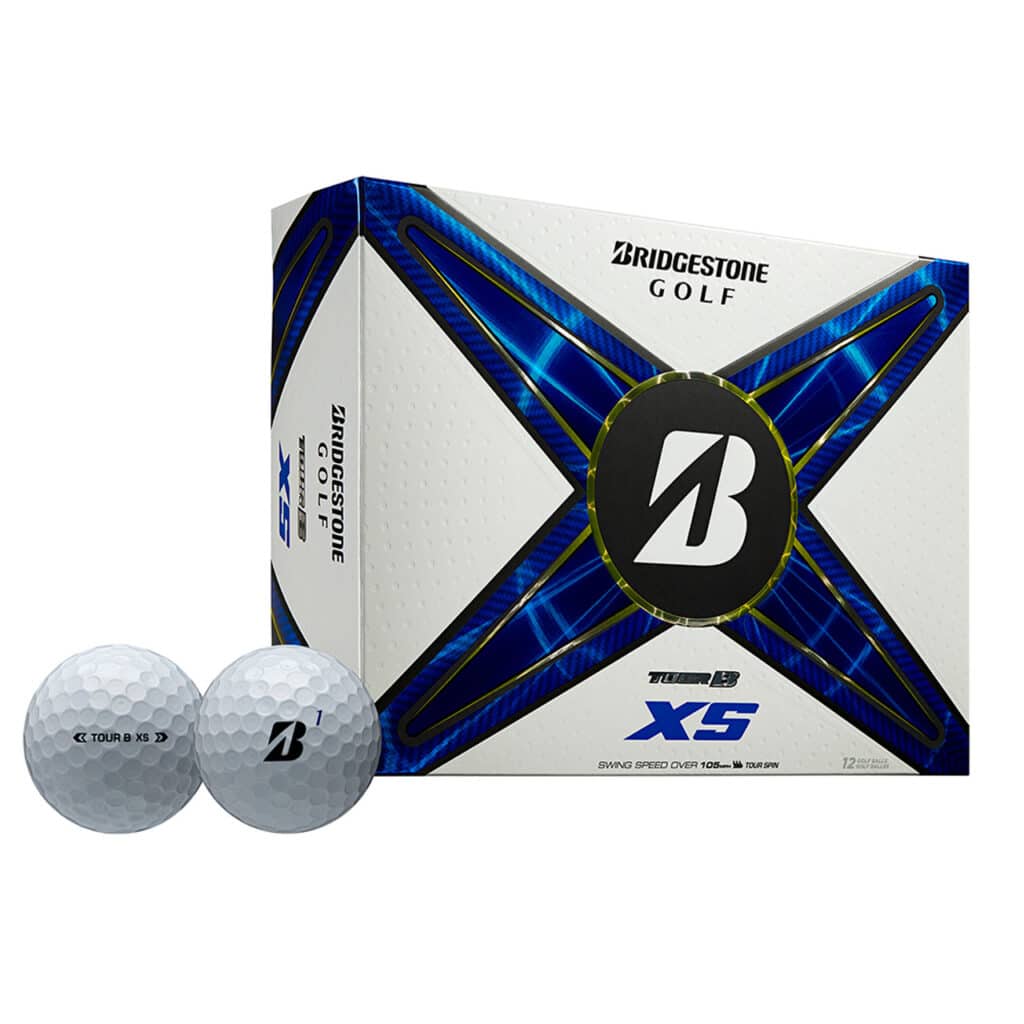
Core Compression
At the center of every golf ball is the core, and its compression level affects how the ball responds to your swing.
Low-compression cores (softer): Great for slower swing speeds because they compress more easily and “spring” off the face to generate distance.
High-compression cores (firmer): Better for faster swings. These balls need more force to compress, but can explode off the clubface when hit hard.
Think of compression like a trampoline. If your weight doesn’t compress it enough, you won’t bounce. Same with a golf ball.
Cover Material (Surlyn vs. Urethane)
The cover affects both feel and spin, and distance balls usually use:
Surlyn: A harder material that creates less spin and more durability. It’s common in distance balls because lower spin = straighter, longer flight.
Urethane: Softer, found in premium balls, offers more spin and control, especially around the greens, but might sacrifice a little distance off the tee.
Most distance-focused balls use Surlyn, but some blend materials to give you the best of both.
Dimple Pattern
Dimples aren’t just for looks; they control the aerodynamics of the ball.
- More shallow or wider dimples = higher flight and longer carry.
- Some balls use unique patterns (hex, dual dimples, etc.) to reduce drag and stay in the air longer.
So when you see a ball advertised with a “high-launch, low-drag” dimple design — that’s what they’re talking about.
How Swing Speed Affects Ball Choice
One of the biggest mistakes golfers make is choosing a ball without considering their swing speed. Here’s why it matters:
Low vs. High Swing Speeds
Low swing speeds (under ~90 mph): Need balls with lower compression. These compress more easily, so the energy from your swing actually transfers into ball speed.
High swing speeds (over 100 mph): Can use higher-compression balls, which unlock more distance and performance — but only if you swing fast enough to compress them.
If you have a slower swing and use a tour-level, high-compression ball, you’re leaving distance on the table.
Matching Compression to Swing Speed
General rule of thumb:
| Swing Speed | Recommended Compression | Example Use |
| < 85 mph | Low (50–70) | Seniors, juniors, beginners |
| 85–100 mph | Mid (70–90) | Most amateur golfers |
| > 100 mph | High (90+) | Advanced players, strong drivers |
Choosing the right compression gives you more efficient energy transfer, and that means longer drives with less effort.
Top Golf Balls for Distance (2025 Picks)
There are dozens of golf balls marketed for distance — but not all are created equal. Below are standout picks for different types of players, based on compression, feel, and performance.
Best for Beginners: Callaway Supersoft
Why it works: Ultra-low compression (~38), great for slower swings.
Distance boost: Launches high with low spin to maximize carry.
Bonus: Soft feel around the greens.
Best for Average Golfers: Titleist Tour Speed
Why it works: Mid-compression, balanced for average swing speeds (~90 mph).
Distance boost: Fast core with aerodynamic dimple design.
Bonus: Better feel than most distance balls.
Best for Fast Swingers: TaylorMade TP5x
Why it works: High compression core with 5-layer construction.
Distance boost: Low spin off the driver + explosive ball speed.
Bonus: Tour-level performance with distance focus.
Distance vs. Control — What’s the Trade-Off?
Here’s the reality: most golf balls can’t give you maximum distance and maximum spin control at the same time. There’s always a bit of a trade.
Distance Balls:
- Lower spin off the driver = straighter, longer shots
- Usually have a firmer feel, and Surlyn covers
- Less stopping power on the greens
Control-Focused Balls:
- Higher spin = more precision on chips and approach shots
- Softer feel (urethane covers)
- Slightly less total distance, especially for slower swings
So what should you choose?
It depends on your game. If you struggle to get the ball out there, go with a distance ball. But if you’re already long and want to shape shots or stick greens, control might be worth the trade.
Some newer balls aim to give you a bit of both, but even those lean more one way or the other.
Tips to Maximize Distance (Beyond the Ball)
A distance ball helps — but it’s not the only factor. Sometimes, simple setup or equipment tweaks can unlock yards without changing your swing.
Tee Height
Teeing the ball too low can lead to low, spinny drives that kill distance. Try this:
- Half the ball should sit above the top edge of the driver at address.
- This promotes a higher launch and lower spin, ideal for carry.
Launch Angle
The best drives don’t just go fast — they launch at the right angle. Too low? You’re wasting speed. Too high? Ballooning.
- An ideal launch is usually between 12 –15 degrees.
- Hitting up on the ball slightly (positive angle of attack) helps get there.
Get Fit for Your Driver
A poorly fit driver can cost you 20+ yards. Seriously.
- Loft, shaft flex, and head design all affect distance.
- A fitting helps match the club to your swing speed and angle of attack.
Combine a good ball with a well-fit driver and proper setup — that’s how you unlock real, lasting distance.
So, What’s the Best Golf Ball for Distance?
If you’re chasing extra yards, the golf ball is a smart place to start. But the best ball for distance isn’t one-size-fits-all. It depends on your swing speed, feel preference, and whether you prioritize distance or control.
To recap:
- Choose a compression that matches your swing.
- Know the difference between Surlyn and urethane covers.
- Don’t ignore dimple patterns or aerodynamics.
- And remember — the ball is only part of the equation. Setup and driver fit matter just as much.
Test a few balls, pay attention to your launch monitor numbers, and find what flies best for you.